

Overview
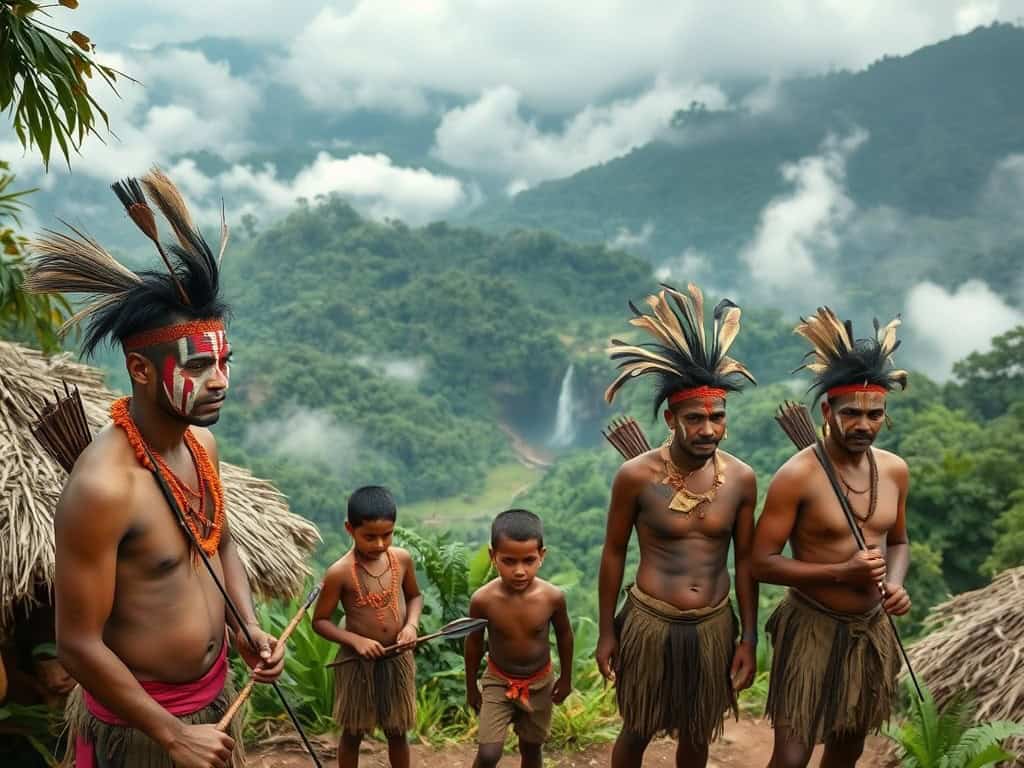
The U’wa are an indigenous people who have inhabited the northeast forests of the Colombian Andes since time immemorial. In the 1990s, their approximately 5,000 community members faced an existential threat when Occidental Petroleum (Oxy), a United States-based corporation, sought to exploit oil resources on their sacred ancestral lands.
For the U’wa, this was not merely an environmental or economic issue—it was a spiritual crisis. In their cosmology, oil is the blood of Mother Earth, and extracting it would be tantamount to killing their mother.
The Conflict Begins
In the early 1990s, Occidental Petroleum began negotiations with the Colombian government for oil exploration rights on U’wa traditional lands. Despite Colombia’s recently reformed Constitution guaranteeing indigenous administration of territories and land ownership, by 1995 the government granted Occidental of Colombia a license for oil exploration on the Samore block—a significant traditional land for the U’wa.
The U’wa first pursued legal remedies. In October 1995, a tribunal ruled in their favor, but the Supreme Court overturned the decision. Legal avenues that should have protected the U’wa were undermined by economic interests—the proposed oil development promised the Colombian government up to $14 billion in revenues.
The Suicide Threat
Faced with legal defeat and the imminent desecration of their sacred lands, the Werhayas (spiritual leaders) and other U’wa made an extraordinary threat: they would commit mass suicide by walking off a cliff in the Andes.
This was no empty gesture. U’wa oral history tells of ancestors who jumped to their deaths from a local cliff rather than submit to Spanish colonization in the 17th century. The modern U’wa threatened to follow the same path.
As U’wa leader Roberto Cobaria stated: “We are claiming our ancestral and constitutional rights to life and to our traditional territory. We demand that the Colombian government and Oxy leave us in peace and that once and for all they cancel the oil project in this area. We U’wa people are willing to give our lives to defend Mother Earth from this project which will annihilate our culture, destroy nature, and upset the world’s equilibrium.”
Building International Support
While legal disputes continued, a powerful transnational network of allies grew rapidly:
- August 1996: U’wa Senator Lorenzo Muelas organized a forum attended by Colombians, international journalists, and NGOs
- January 1997: U’wa shared their stories at the National Forum on the Environment at Guaduas, forming connections with Colombian environmental NGOs
- Spring 1997: Nearly 3,000 students, environmentalists, U’wa, and supporters marched to the Ministry of the Environment in Bogotá
- May 1997: The Amazon Coalition invited U’wa and National Indigenous Organization of Colombia (ONIC) leaders on speaking tours in the US and Europe that continued through 2000
The U’wa Defense Project
In June 1997, the U’wa Defense Project (later the U’wa Defense Working Group) was established by US-based environmental NGOs. Member organizations included:
- Rainforest Action Network (RAN)
- Project Underground
- Colombian Human Rights Commission
- Action Resource Center
- Earth Trust Foundation
- Center for Justice and International Law
- Sol Communications
- Earthjustice Legal Defense Fund
The coalition orchestrated negative publicity campaigns, helped the U’wa win the Goldman Environmental Prize in 1998, and organized demonstrations at over 75 locations in the US, Japan, and the UK. They targeted Occidental’s shareholder meetings and its main investor, Fidelity Investments, and even rallied against Al Gore during his 2000 presidential campaign due to his ties with Oxy.
Key Events and Turning Points
1997-1998: International Pressure Mounts
- June 1997: The Colombian government requested intervention from the Organization of American States (OAS), which recommended immediate suspension of oil exploration activities
- October 1997: U’wa leader Roberto Cobaria reported being abducted, beaten, and threatened with death unless he signed an authorization agreement for oil development
- January 1998: After receiving thousands of protest letters, Shell withdrew from the Samore project
1999: Violence and Tragedy
- March 1999: Three US environmental activists—including U’wa Defense Project founder Terence Freitas—were killed by FARC guerrillas while organizing with the U’wa
- August 1999: Colombia granted the U’wa a title for a unified reservation, but conspicuously excluded the Gibraltar I drilling area
- November 1999: Over 200 U’wa and farmers occupied the Gibraltar I drill site. Colombian police attacked with tear gas, pushing protesters into a nearby river. Three children died in the assault. Many adults were injured and some went missing
- January 2000: All occupiers were removed by thousands of Colombian troops
2000-2001: Direct Action and Victory
Following their eviction, the U’wa called three peasant strikes that brought the local economy to a halt. They set up road blockades to prevent trucks from reaching the Oxy drill site.
In May 2001, at their shareholders meeting, Occidental announced they would abandon all plans to drill in the region, claiming insufficient oil reserves. However, the fact that subsequent test wells—standard industry practice—were never drilled suggested other factors were at play.
The Aftermath
Transnational allies declared victory and moved on to other campaigns. The U’wa response was more measured—they suspended direct action but remained suspicious about long-term protection of their land.
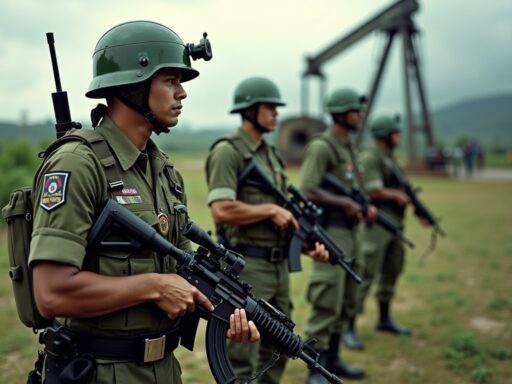
Their suspicions proved justified. As early as October 2002, oil machinery appeared again on U’wa territory, this time under the authority of Ecopetrol, the Colombian state oil company, backed by heavy military protection.
Ongoing Struggle
The U’wa continue to face threats to their ancestral territory. In the 2010s and beyond, Ecopetrol has pursued operations at sites like Magallanes, prompting continued U’wa resistance. Asou’wa, an organization representing 17 U’wa communities, continues to advocate for territorial rights and oppose extraction projects.
As stated in a recent U’wa declaration: “The U’wa People state that we will use all of the legal, political, and cultural resources at our disposal to defend our ancestral territory. We believe that this is a just and dignified struggle not only for the U’wa, but for all of humanity the degree to which humanity needs air, water, earth, and healthy food to be able to continue existing.”
U’wa Cosmology and Philosophy
Central to understanding the U’wa resistance is their worldview:
- Oil as sacred blood: “Oil is the blood of our mother earth. It is not negotiable.” – Roberto Cobaria
- Land as living being: In U’wa cosmology, the land is the flesh of the mother, the root of creation, the sustenance of life, and the font of collective memory and spirit
- Interconnected existence: The U’wa believe drilling would damage the delicate cloud forest ecosystem and destroy the cultural and physical integrity of their community
Lessons and Legacy
The U’wa struggle demonstrates:
- The power of indigenous resistance combined with international solidarity
- The conflict between economic interests and indigenous rights, even in nations with constitutional protections
- The effectiveness of diverse tactics: legal action, direct action, international campaigns, and civil disobedience
- The ongoing nature of struggles for indigenous territorial rights
- The willingness of communities to make ultimate sacrifices to protect their sacred lands and cultural survival
Goals
The goal of the U’wa people was to keep Occidental Oil from drilling within and around their reservation and ancestral homeland. As Roberto Cobaria, President of the Traditional U’wa Authority, stated: “We are demanding that the Colombian government permanently suspend the oil exploration license of Occidental Petroleum and its associate Shell Oil on our traditional lands.”
This page honors the courage and determination of the U’wa people in their ongoing struggle to protect their ancestral lands, culture, and way of life.