
Cancerous Moles: The Complete Guide (With Less Panic, More Facts)
Let’s talk about cancerous moles. Yes, I know—not exactly dinner party conversation. But here’s the thing: understanding what to look for can literally save your life. And since you’re already here Googling “what do cancerous moles look like” at 2 AM (we’ve all been there), let’s turn that worry into useful knowledge.
Full disclosure: My son recently had a mole removed that we worried might be cancerous. Spoiler alert—it wasn’t! But that nerve-wracking experience taught me everything I wish I’d known from the start. So grab a cup of coffee (or wine, no judgment), and let’s dive into everything you need to know about cancerous moles.
What Are Cancerous Moles, Anyway?
First things first: not all moles are created equal, and most moles are perfectly harmless. You may be wondering, “Are moles cancerous?” The short answer is that most aren’t, but some can develop into melanoma—a serious form of skin cancer.
A cancerous mole is essentially a growth where the pigment-producing cells (melanocytes) start behaving badly. Instead of forming a nice, normal mole and calling it a day, they decide to throw a party and invite chaos. The result? A mole that changes, grows, or develops characteristics that make dermatologists raise their eyebrows.
Here’s the good news: when caught early, cancerous moles are highly treatable. The survival rate for early-stage melanoma is over 99%. So while we’re taking this seriously, we’re not panicking. Deal?
What Do Cancerous Moles Look Like? The ABCDE Rule
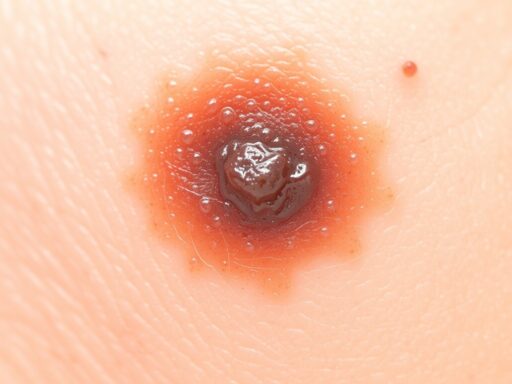
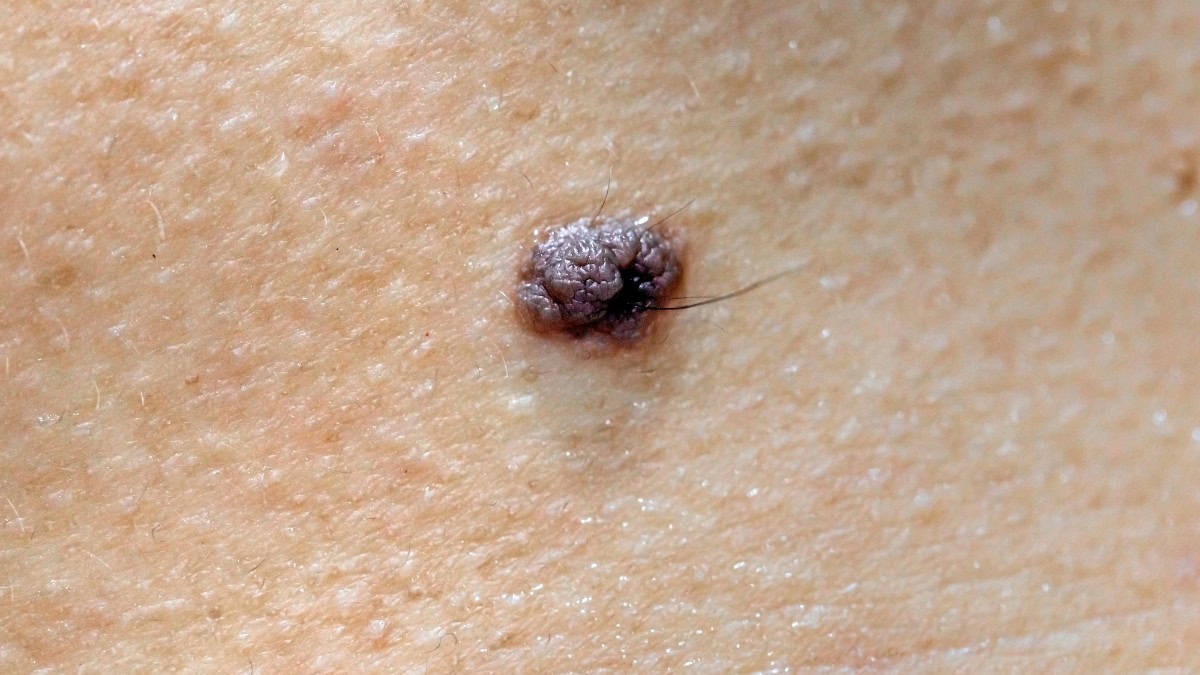
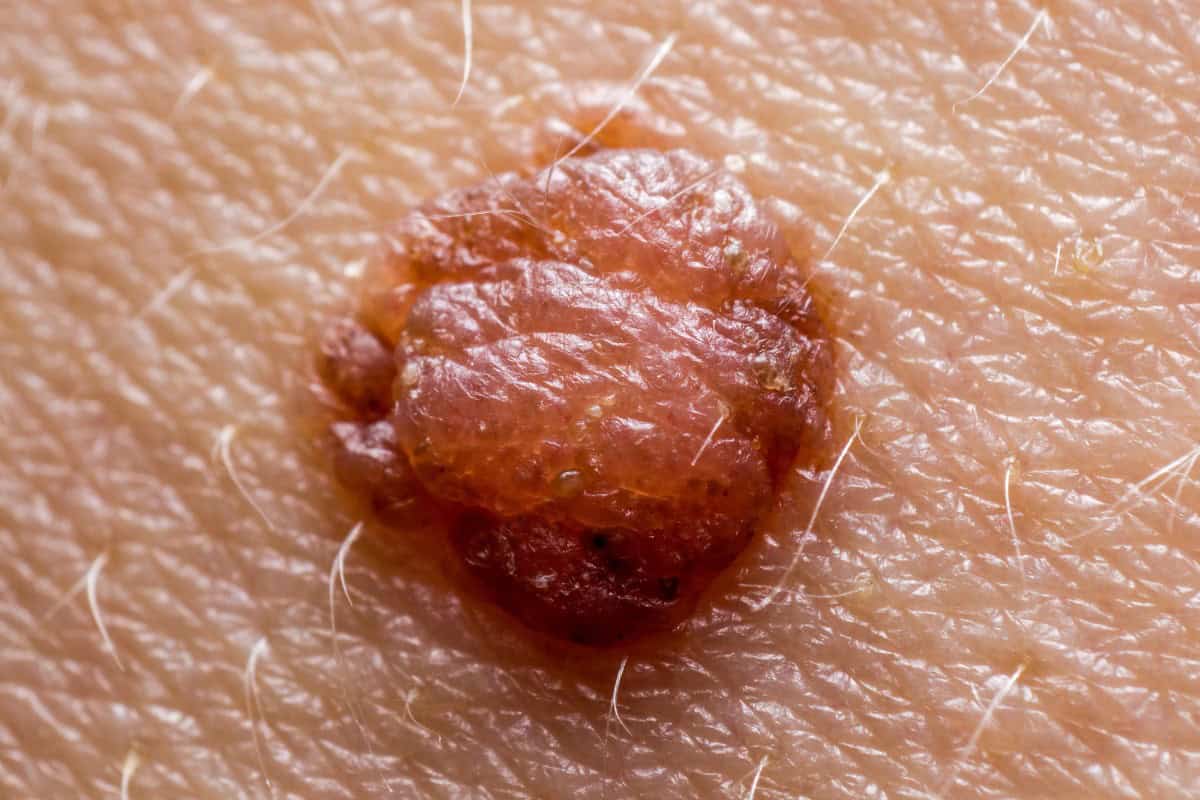
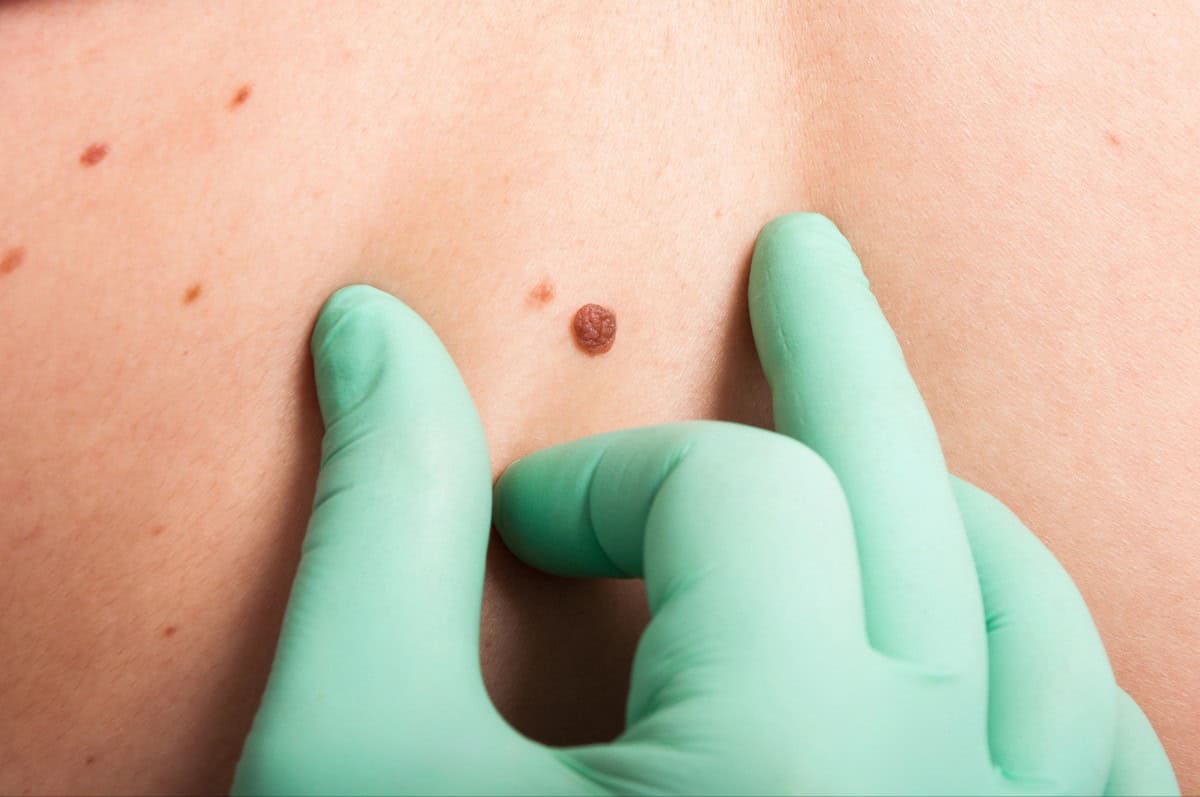
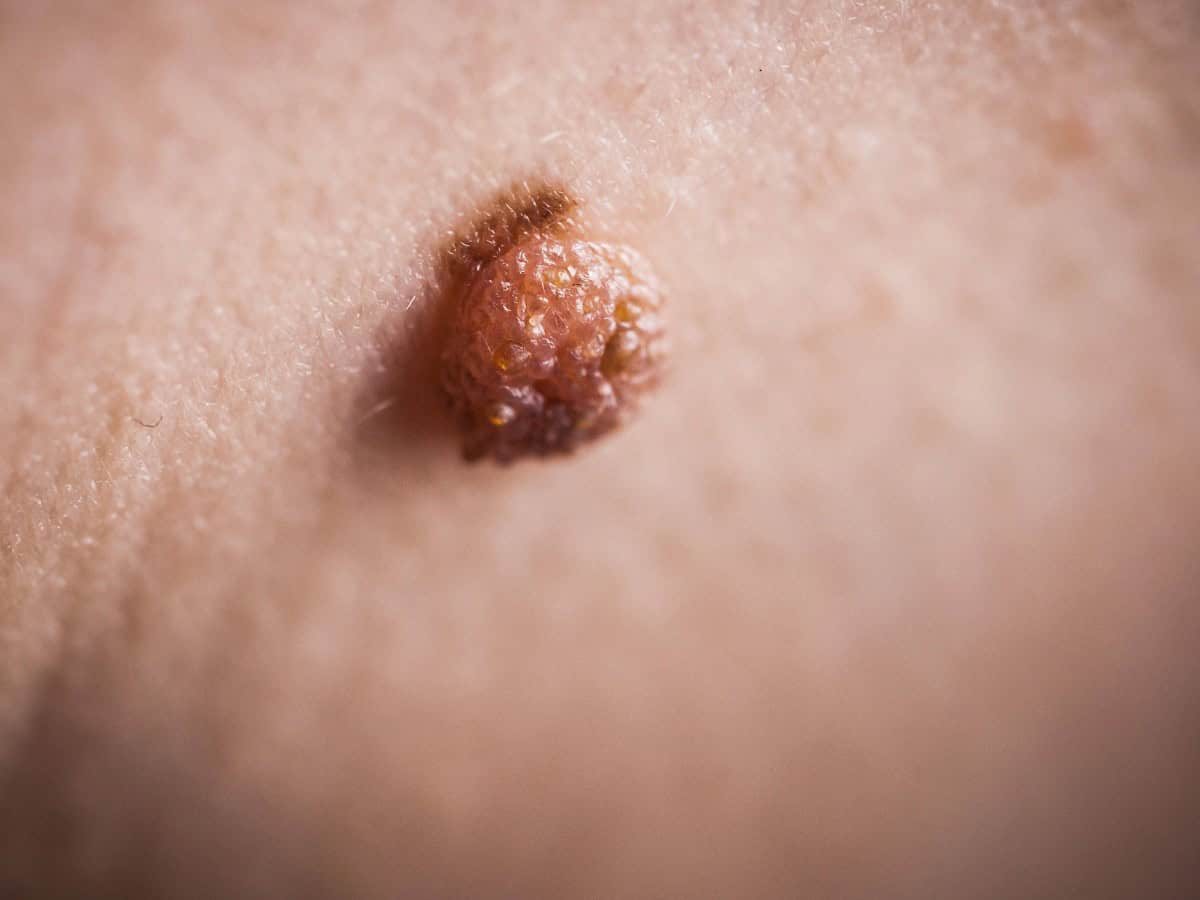
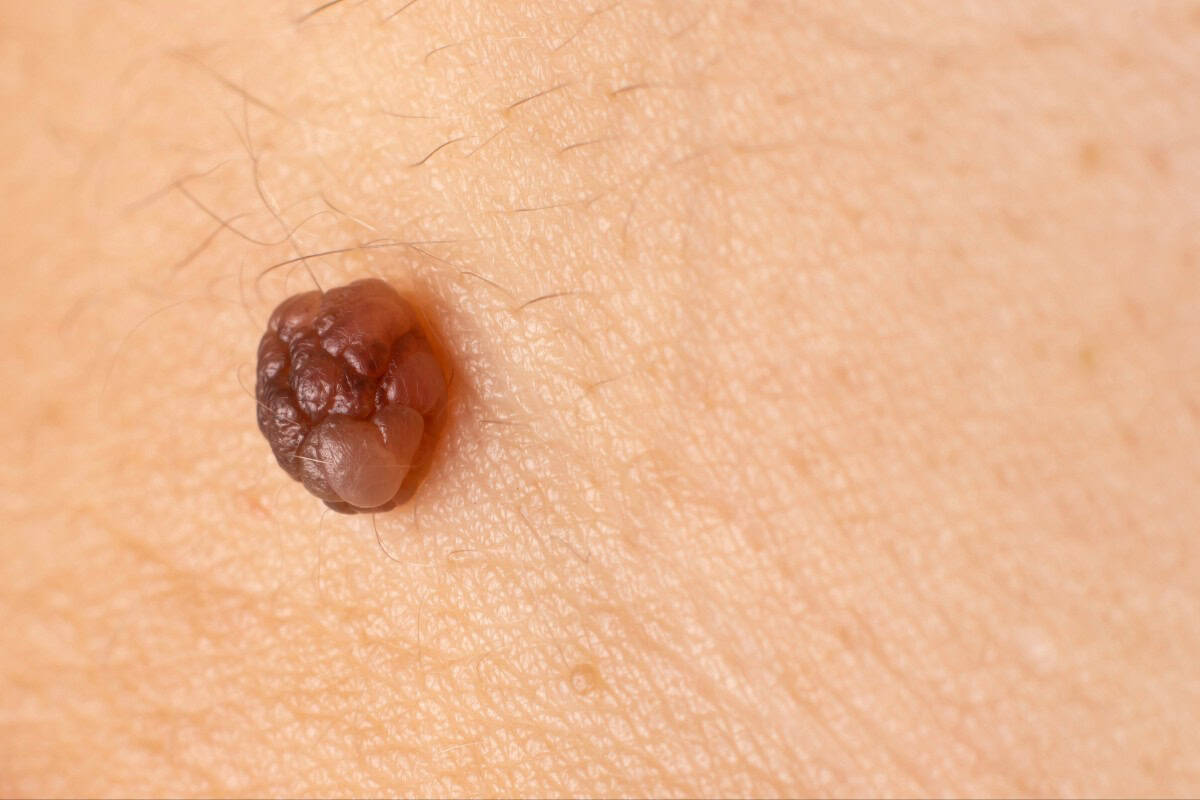
If you’re searching for “pictures of cancerous moles” or “what do cancerous moles look like,” you’re asking the right question. Dermatologists use something called the ABCDE rule to identify potentially cancerous moles. It’s like a checklist, but for your skin:
A is for Asymmetry
Draw an imaginary line through the middle of your mole. Do both halves match? Normal moles are usually symmetrical. Cancerous moles? Not so much. They look lopsided, like someone started drawing a circle and gave up halfway through.
Common question: “Are all asymmetrical moles cancerous?” Nope! But asymmetry is worth getting checked out.
B is for Border
Normal moles have smooth, even borders. Cancerous moles have irregular, scalloped, or poorly defined edges—like someone drew them with their non-dominant hand while riding a roller coaster.
C is for Color
A normal mole is usually one uniform color (tan, brown, or black). Cancerous moles might have multiple colors—brown, black, tan, red, white, or blue. It’s like a paint palette, but on your skin, and definitely not artistic.
People often ask: “Are black moles cancerous?” or “Are pink moles cancerous?” The color itself isn’t the issue—it’s having multiple colors in one mole, or a color that changes over time.
D is for Diameter
Cancerous moles are often larger than 6mm (about the size of a pencil eraser). However, they can be smaller, especially early cancerous moles in their beginning stages. Size isn’t everything, but it’s worth paying attention to.
E is for Evolving
This is the big one. Is your mole changing in size, shape, color, or symptoms (like itching or bleeding)? Normal moles are pretty stable. They’re the reliable friends who show up exactly as expected. Cancerous moles? They’re unpredictable.
Early Signs of Cancerous Moles: What to Watch For
Catching things early is key, so let’s talk about early stage cancerous moles and their warning signs:
- Changes in appearance: Your mole is suddenly looking different than it did six months ago
- Itching or pain: “Do cancerous moles itch?” Yes, they can. While not all itchy moles are cancerous, persistent itching deserves attention
- Bleeding or oozing: Normal moles don’t spontaneously bleed (unless you’ve scratched or irritated them)
- Crusting or scabbing: If your mole develops a crusty surface without obvious injury, get it checked
- Raised texture: While many raised moles are perfectly normal, watch for moles that suddenly become raised or bumpy
- New moles after age 30: Most people stop developing new moles by their 30s. A new mole appearing later could warrant attention
Real talk: “Do cancerous moles hurt?” They can, but many don’t—especially in early stages. Don’t wait for pain. That’s like waiting for your check engine light to start honking before you get your car serviced.
Cancerous vs Non-Cancerous Moles: Key Differences
Let’s break down the difference between normal moles and their troublemaking cousins:
Non-Cancerous Moles:
- Symmetrical and round or oval
- One uniform color
- Smooth, even borders
- Usually less than 6mm
- Remain stable over time
- May have hair growing from them (which is actually a good sign!)
Potentially Cancerous Moles:
- Asymmetrical shape
- Multiple colors or changing color
- Irregular or jagged borders
- Larger than 6mm (but can be smaller)
- Changing in any way
- New symptoms like itching, bleeding, or pain
“Can moles be cancerous?” Yes. “Are all moles cancerous?” Absolutely not. In fact, what percentage of moles are cancerous? Studies suggest less than 1% of moles ever become melanoma. So while vigilance is important, wholesale panic is not required.
Types of Cancerous Moles
Not all skin cancers involving moles are the same. Here are the main types you should know about:
Melanoma
The most serious type of skin cancer. Melanoma cancerous moles can develop from existing moles or appear as new growths. They’re the ones that follow the ABCDE rules we discussed earlier.
Basal Cell Carcinoma
While basal cell cancerous moles are less aggressive than melanoma, they still need treatment. They often appear as pearly or waxy bumps, or as flat, flesh-colored or brown scar-like lesions.
Squamous Cell Carcinoma
These may appear as firm red nodules or flat lesions with a scaly, crusted surface. While slower-growing than melanoma, they still require medical attention.
Atypical (Dysplastic) Moles
“Are atypical moles cancerous?” Not necessarily, but they’re like the suspicious characters in a crime drama—worth watching closely. These are larger than normal moles with irregular shapes and colors. While not cancerous themselves, they increase your risk of developing melanoma.
Can Moles Become Cancerous?
Great question! Yes, existing moles can turn cancerous, though it’s not common. Here’s what you need to know:
- Can moles you are born with become cancerous? Yes, though it’s rare. Congenital moles (present at birth) have a slightly higher risk, especially if they’re large
- Can old moles become cancerous? Absolutely. This is why dermatologists recommend lifetime monitoring
- How do moles become cancerous? Usually through DNA damage from UV radiation (hello, sun exposure) or genetic factors
- Can benign moles turn cancerous? While most benign moles remain harmless forever, changes can occur, which is why regular self-checks matter
Common Questions About Cancerous Moles
Do Cancerous Moles Grow Hair?
Here’s an interesting tidbit: “Can cancerous moles grow hair?” Generally, no. The presence of hair growing from a mole is usually a good sign that it’s normal and healthy. When cells become cancerous, they typically lose the ability to produce hair follicles. So if your hairy mole is making you self-conscious, at least you can take comfort in knowing it’s probably benign.
Are Raised Moles Cancerous?
Not usually! Many perfectly normal moles are raised. The question isn’t whether a mole is raised or flat, but whether it’s changing. A mole that suddenly becomes raised, or changes from flat to raised, deserves attention.
Are Red Moles Cancerous?
Most red moles (also called cherry angiomas) are harmless blood vessel growths that increase with age. However, if a brown mole develops red coloring, or if a red growth follows the ABCDE warning signs, get it checked.
Are Itchy Moles Cancerous?
Not necessarily, but persistent itching without an obvious cause (like dry skin or irritation from clothing) warrants a dermatologist visit. Many people ask, “Do cancerous moles itch all the time?” The answer is no—they might itch occasionally or not at all.
How Fast Do Cancerous Moles Grow?
This varies, but melanomas can grow relatively quickly—sometimes showing noticeable changes within weeks or months. This is why monthly self-checks are so important. You want to catch changes early, like a smoke detector for your skin.
What to Do If You’re Worried About a Mole
So you’ve found a suspicious mole. Now what? Here’s your action plan:
- Don’t panic. Seriously. Most suspicious moles turn out to be harmless (ask me how I know 😅)
- Document it. Take clear photos of the mole from multiple angles. This helps you track changes and gives your dermatologist baseline information
- Schedule a dermatologist appointment. Don’t wait for your annual checkup if something seems off
- Write down your concerns. When did you notice it? What changes have you seen? Any symptoms?
- Avoid Dr. Google rabbit holes at 3 AM. Looking at hundreds of pictures of cancerous moles online will only increase your anxiety
The Biopsy Process (From Personal Experience)
When my son had his suspicious mole removed, I learned that the biopsy process is straightforward:
- The examination: The dermatologist looks at the mole with a dermatoscope (a special magnifying tool)
- The numbing: If they decide to biopsy, they numb the area with local anesthetic
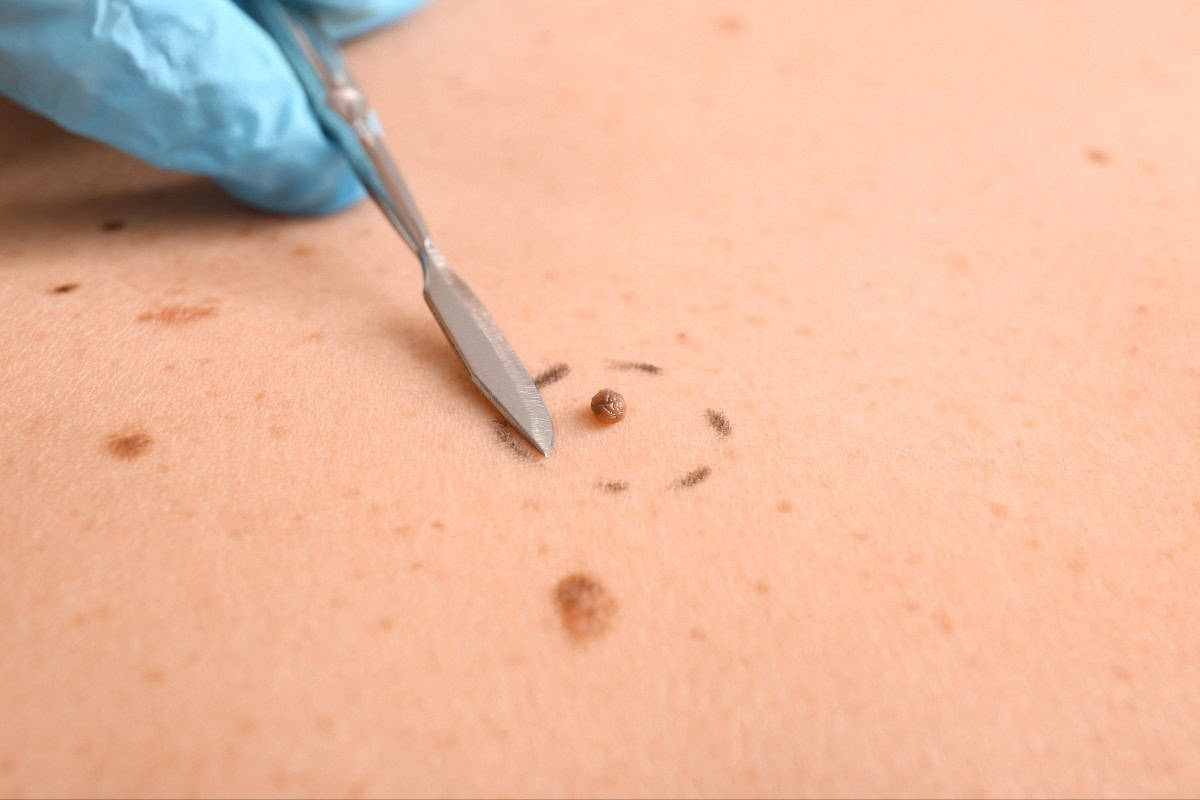
- The removal: They remove the mole (usually the whole thing) using a small surgical tool
- The stitches: Depending on the size, you might need a stitch or two
- The wait: The sample goes to a lab for analysis (this is the hardest part—the waiting!)
- The results: Usually within 1-2 weeks, you’ll get results
In our case, the waiting was nerve-wracking. But the procedure itself? Quick and relatively painless. The peace of mind? Priceless.
Treatment for Cancerous Moles
If a mole does turn out to be cancerous, treatment depends on the type and stage:
Early Stage Treatment
For early cancerous moles, treatment often involves surgical excision—removing the mole and a margin of healthy tissue around it. The survival rate is excellent, and many people are cancer-free after this single procedure.
Advanced Treatment
If melanoma has progressed, treatment might include:
- Wider surgical excision
- Lymph node biopsy or removal
- Immunotherapy
- Targeted therapy
- Radiation therapy
- Chemotherapy (less common now with newer treatments available)
The good news? Treatment for melanoma has advanced dramatically in recent years. Outcomes are better than ever before.
Prevention: Your Best Defense
An ounce of prevention is worth a pound of cure (or in this case, worth not having to get a concerning mole removed). Here’s how to reduce your risk:
- Sun protection: Use SPF 30 or higher, reapply every 2 hours, and seek shade during peak sun hours (10 AM – 4 PM)
- Avoid tanning beds: Just don’t. The UV damage isn’t worth it
- Wear protective clothing: Long sleeves, wide-brimmed hats, and UV-blocking sunglasses
- Monthly self-exams: Check your entire body once a month, including hard-to-see areas (use a mirror or enlist help)
- Annual dermatologist visits: Especially if you have risk factors like fair skin, family history, or many moles
- Photograph your moles: Create a baseline so you can spot changes over time
Who’s at Higher Risk?
Some people need to be extra vigilant about cancerous moles:
- Fair skin, light hair, and light eyes
- History of sunburns (especially blistering sunburns in childhood)
- Family history of melanoma
- 50+ moles on your body
- Atypical or dysplastic moles
- Weakened immune system
- Personal history of skin cancer
- Significant sun exposure or tanning bed use
If this sounds like you, make friends with your dermatologist. Regular checkups could literally save your life.
Special Considerations: Cancerous Moles in Different Locations
Cancerous Moles on Scalp
These can be tricky to spot since they’re hiding under your hair. Ask your hairdresser to keep an eye out during appointments, or have someone help you check your scalp regularly. Yes, cancerous moles on the head and scalp can be serious since they might go unnoticed longer.
Cancerous Moles on Face
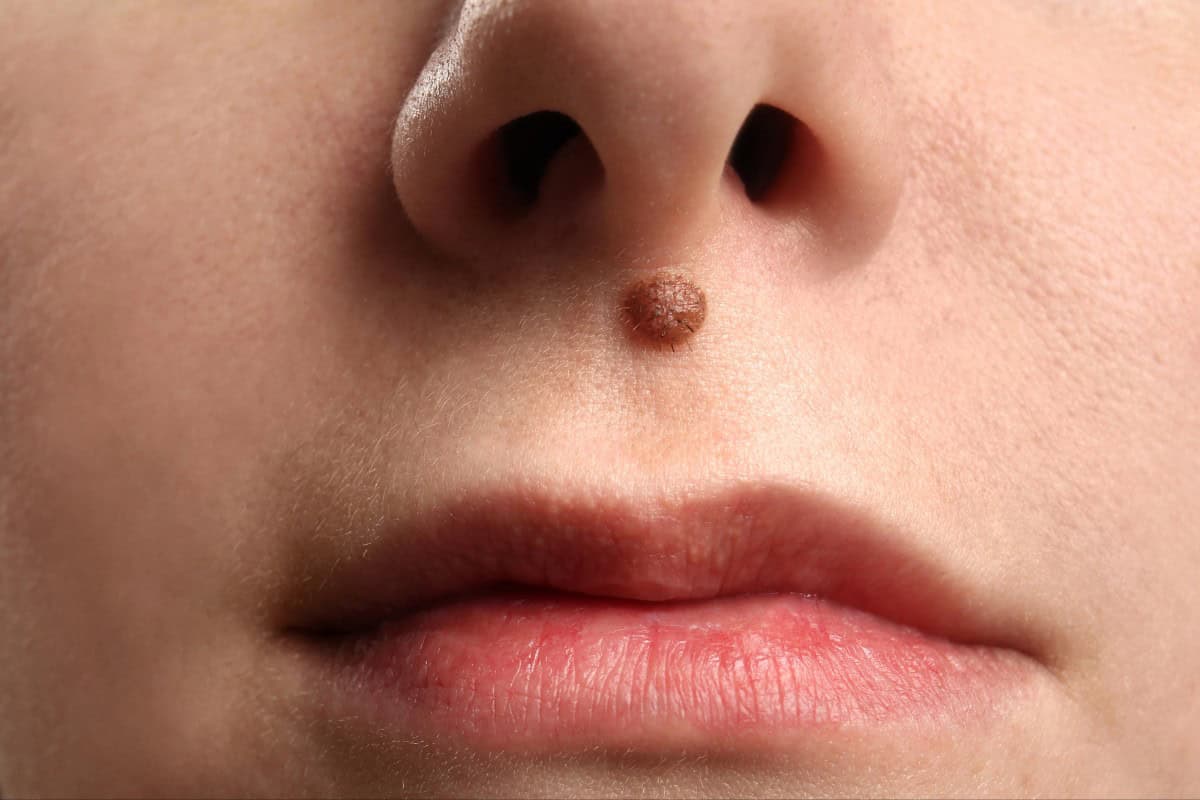
Facial moles get more sun exposure and are easier to monitor. The trade-off? Treatment might involve more cosmetic considerations. Dermatologists are skilled at minimizing scarring in visible areas.
Cancerous Moles on Back
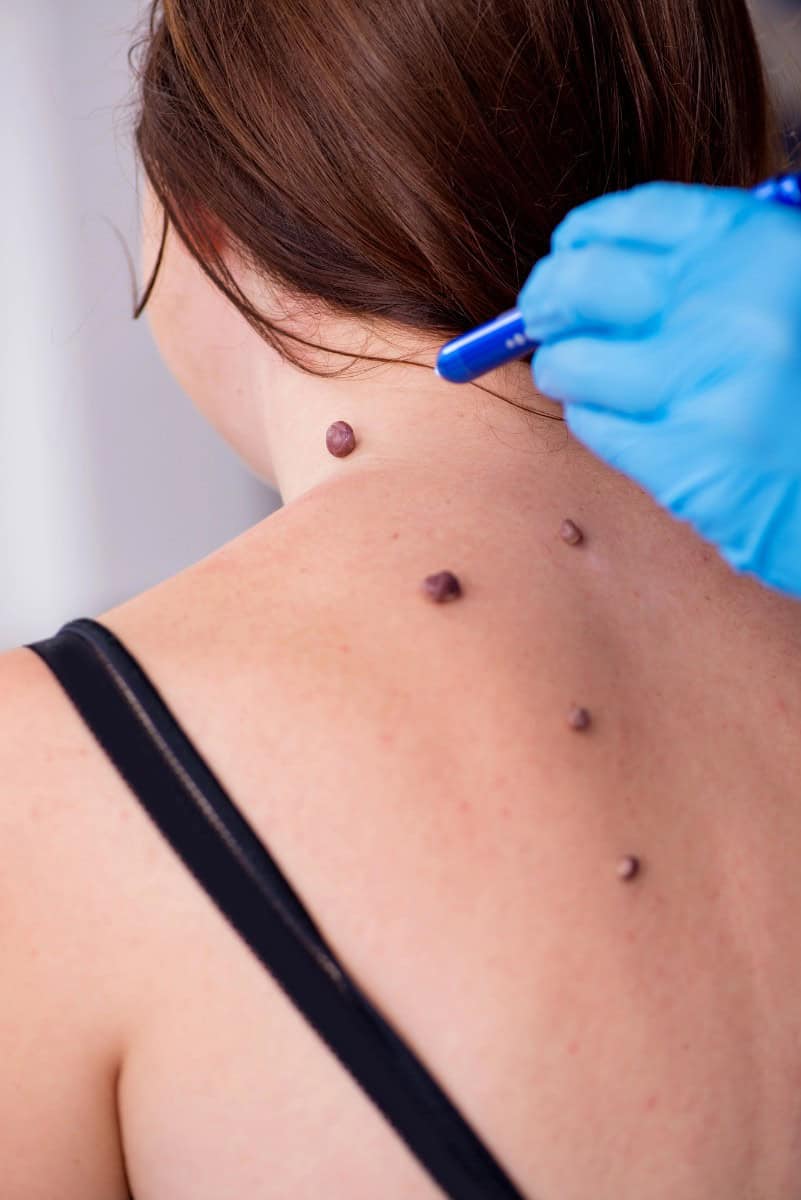
The back is a common location for melanoma, especially in men, probably because it’s harder to apply sunscreen there thoroughly. Use a mirror or take photos to monitor moles on your back regularly.
Other Locations
Melanoma can develop anywhere, including less common spots like cancerous moles on breast, under arms, on palms or soles, and even in areas not exposed to sun. Don’t skip these areas during self-checks!
What About Cancerous Moles on Dogs?
Yes, our furry friends can get cancerous moles too! If you’ve noticed a strange growth on your dog and are searching for “cancerous moles on dogs pictures” or “what do cancerous moles look like on a dog,” here’s what to know:
- Dogs can develop melanoma, mast cell tumors, and other skin cancers
- Warning signs are similar: rapid growth, irregular shape, bleeding, or ulceration
- Certain breeds are more prone to skin cancers
- Any new or changing lump should be examined by a veterinarian
Your vet can biopsy suspicious growths just like a dermatologist would for humans. Better safe than sorry when it comes to our four-legged family members!
The Bottom Line: Knowledge Without Panic
Here’s what I want you to take away from this epic deep-dive into cancerous moles:
1. Most moles are harmless. Don’t look at every mole like it’s a ticking time bomb. The vast majority will never cause problems.
2. Know what to look for. The ABCDE rule and monthly self-checks are your best friends. Changes are the key word here.
3. When in doubt, check it out. Seriously, dermatologists would rather see a thousand normal moles than miss one melanoma. You’re not bothering them—it’s literally their job.
4. Early detection saves lives. Caught early, cancerous moles are highly treatable with excellent outcomes.
5. Prevention matters. Sunscreen isn’t just for beach days. Make it a daily habit.
6. Don’t let fear win. Yes, skin cancer is serious. But anxiety-driven internet searches at midnight aren’t helping anyone. If you’re concerned, schedule an appointment and get professional eyes on it.
Final Thoughts
After going through the scary “is this mole cancerous?” experience with my son, I can tell you this: the anticipation is usually worse than the reality. Most suspicious moles turn out to be nothing. But even if one does turn out to be concerning, catching it early means excellent treatment outcomes.
So bookmark this page, do your monthly self-checks, wear your sunscreen, and don’t hesitate to see a dermatologist when something seems off. Your future self will thank you.
And remember—while you’re busy worrying about skin moles, don’t forget about those yard moles tearing up your lawn. Visit our other guides for help with those furry troublemakers, or check out our chemistry section if you need help calculating moles for your science homework. We really do cover all the moles here at Moles.org!
Stay safe, stay sun-smart, and when in doubt, get it checked out.
Disclaimer: This article is for informational purposes only and is not a substitute for professional medical advice, diagnosis, or treatment. Always seek the advice of your physician or other qualified health provider with any questions you may have regarding a medical condition. If you think you may have a medical emergency, call your doctor or 911 immediately.