

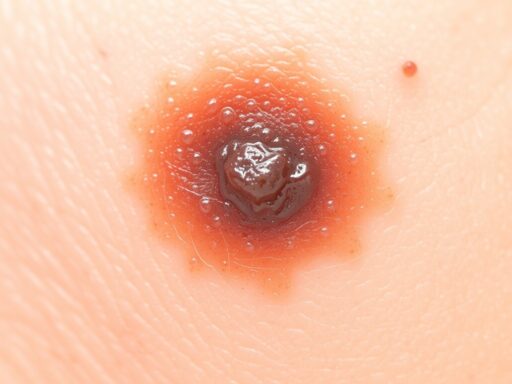
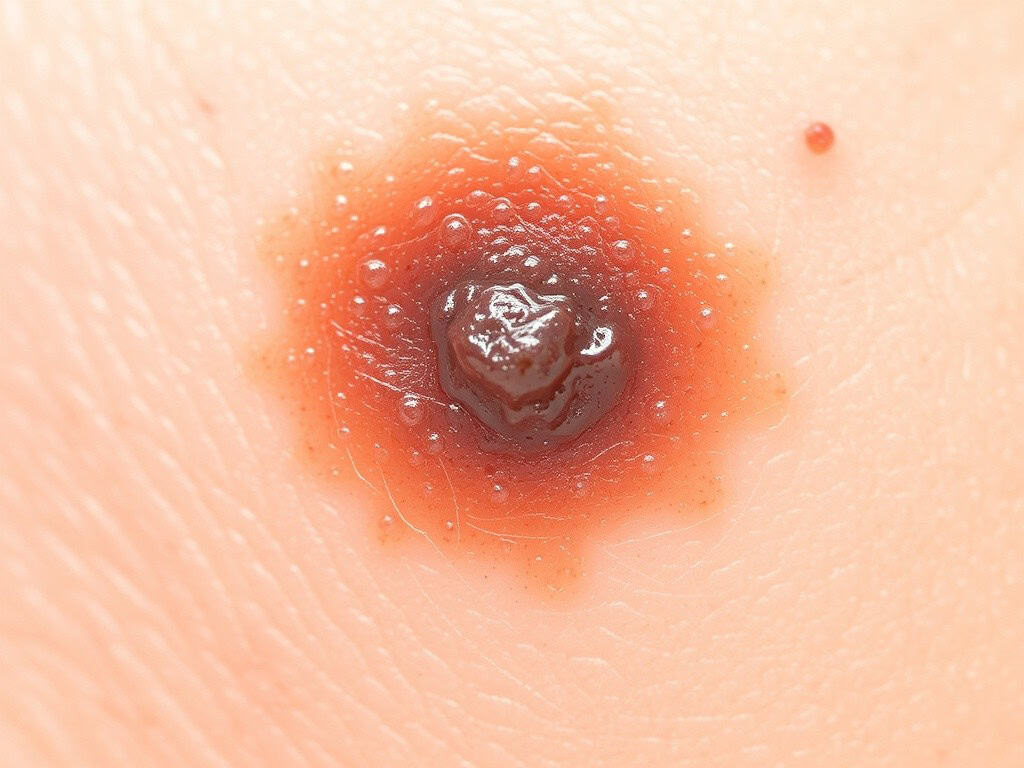
What Is an Atypical Mole? Let’s Start with the Basics
So your dermatologist used the term “atypical mole” and now you’re Googling at 2 AM wondering if you should panic. First, take a deep breath. We’re here to help you understand what’s going on with your skin—clearly, calmly, and without the medical jargon that makes everything sound scarier than it needs to be.
What is an atypical mole?
An atypical mole (also called a dysplastic nevus) is a mole that looks unusual or irregular compared to normal moles. Think of it as your skin’s version of “hmm, this doesn’t quite follow the standard mole template.”
Here’s what makes a mole “atypical”:
- Irregular shape: Not a perfect circle—more like a map of a fictional island
- Uneven borders: Edges that are blurry, notched, or irregular
- Multiple colors: Various shades of brown, tan, or pink in one mole
- Larger size: Usually bigger than a pencil eraser (6mm)
- Flat or slightly raised: Different texture than surrounding skin
Important note: Atypical does NOT automatically mean cancerous. It means “different” or “unusual”—and unusual doesn’t always equal dangerous.
Atypical Mole Meaning: What Does “Atypical” Really Mean?
Let’s decode the medical terminology because “atypical” sounds way scarier than it often is.
What does atypical mole mean?
“Atypical” simply means “not typical” or “irregular.” When applied to moles, it means the cells look a bit unusual under the microscope. They’re not following the normal mole cell pattern, but they’re not necessarily cancer cells either.
Think of it like handwriting: most people write the letter “A” similarly (typical), some people have slightly quirky handwriting (mildly atypical), some have very unusual handwriting (severely atypical), and then there’s doctor handwriting (complete chaos, but we’re getting off track).
An atypical mole sits on a spectrum between completely normal and melanoma. It’s somewhere in the middle—worth monitoring, but not necessarily an immediate crisis.
Atypical Mole vs Melanoma: Understanding the Difference
This is the question keeping you up at night: “Is my atypical mole melanoma?”
Short answer: An atypical mole is NOT the same as melanoma.
Here’s the breakdown:
Atypical Mole (Dysplastic Nevus)
- Status: Benign (not cancer)
- Risk: Slightly higher chance of developing melanoma in the future
- Action needed: Monitoring and possibly removal
- Cells: Unusual but not malignant
- Growth: Generally stable or slow-growing
Melanoma
- Status: Cancerous
- Risk: Can spread if not treated
- Action needed: Immediate removal and treatment
- Cells: Malignant cancer cells
- Growth: Often grows or changes rapidly
The key difference: Atypical moles are like a yellow traffic light—caution and attention needed, but not a red light emergency. Melanoma is a red light that requires immediate action.
People with atypical moles do have a higher risk of developing melanoma somewhere on their body (not necessarily from the atypical mole itself), which is why monitoring is important. But having an atypical mole doesn’t mean you have cancer or will definitely get cancer.
Severity Levels: Mild, Moderate, and Severe Atypical Moles
When your biopsy results come back mentioning “mild,” “moderate,” or “severe,” here’s what those terms actually mean:
Mildly Atypical Mole (Mild Dysplasia)
What it means: Minor irregularities in the mole cells. They look slightly unusual but are barely different from normal.
Risk level: Very low
What happens: Usually just monitoring. Your dermatologist will likely say “let’s keep an eye on it” and schedule regular skin checks.
Removal: Often not necessary unless the mole is in a location where it’s hard to monitor or has other concerning features.
Moderately Atypical Mole (Moderate Dysplasia)
What it means: The cells show more significant irregularities. They’re definitely unusual but still benign.
Risk level: Low to moderate
What happens: Your dermatologist will likely recommend complete removal to ensure all abnormal cells are gone and to get clear margins (making sure they removed enough tissue around the mole).
Removal: Usually recommended. Complete excision is the standard treatment to prevent any progression.
Severely Atypical Mole (Severe Dysplasia)
What it means: Significant cellular abnormalities. The cells look quite unusual but are still technically benign. This is the highest level of atypia before reaching melanoma.
Risk level: Higher (but still not cancer)
What happens: Definite removal with clear margins. Your dermatologist will want to make sure every bit of abnormal tissue is removed.
Follow-up: More frequent skin checks and careful monitoring of other moles.
Important distinction: Even severely atypical moles are considered benign. “Severe” refers to how much the cells deviate from normal, not whether they’re cancerous.
Severely Atypical Mole and Freaking Out? Read This
We see you. You just got biopsy results saying “severely atypical” and you’re spiraling. Let’s address this directly because this is a common search for a reason.
First: Breathe. Severely atypical does not mean you have melanoma.
Second: Understand what happened. Your doctor found a mole concerning enough to biopsy, and the biopsy showed significant cellular irregularities. This is actually GOOD news—you caught something unusual before it became a problem.
Third: Know what comes next. The standard treatment for severely atypical moles is complete surgical excision with clear margins. This means removing the mole and a small border of normal skin around it to ensure all abnormal cells are gone.
Fourth: Put it in perspective.
- You don’t have cancer (severely atypical moles are benign)
- The treatment is straightforward (surgical removal)
- The prognosis is excellent (complete removal typically resolves the issue)
- You’re doing the right thing by being proactive about skin health
Why you might be freaking out: The word “severe” sounds terrifying. Medical terminology is not known for being comforting. “Severe” in this context means “significantly irregular” not “definitely cancer.”
Think of it like this: if normal moles are vanilla ice cream and melanoma is poison, a severely atypical mole is like… rocky road ice cream with way too many chunks. It’s irregular and unusual, but it’s still ice cream, not poison.
Atypical Mole Biopsy: What to Expect
If you’re facing an atypical mole biopsy or just got results back, here’s what the process involves:
Types of Biopsies
Shave Biopsy: The doctor removes the top layers of the mole for examination. Quick and simple, but may not get the whole picture if abnormal cells are deeper.
Punch Biopsy: A circular tool removes a deeper core sample. Gets more tissue for analysis.
Excisional Biopsy: The entire mole plus a margin of normal skin is removed. This is both diagnostic and treatment in one procedure.
Understanding Biopsy Results
Your biopsy report might include terms like:
- “Atypical cells in mole” – The cells don’t look completely normal
- “Dysplastic nevus with mild/moderate/severe atypia” – Official diagnosis with severity level
- “Margins clear” or “margins involved” – Whether all abnormal tissue was removed
- “Recommend complete excision” – They want to remove more tissue to be safe
If your margins weren’t clear (meaning abnormal cells extend to the edge of what was removed), you’ll need a re-excision to get clear margins. This is standard procedure, not a cause for alarm.
Atypical Mole Removal: What Happens Next
If your dermatologist recommends removing your atypical mole, here’s what the process typically looks like:
The Atypical Mole Removal Procedure
- Local anesthetic: They’ll numb the area (the shot pinches but then you won’t feel anything)
- Excision: The mole is surgically removed with a margin of normal skin
- Stitches: The wound is closed with sutures (internal and/or external)
- Bandage: You’ll go home with instructions for wound care
- Pathology: The removed tissue goes to a lab for final examination
Recovery
- Pain: Minimal, usually managed with over-the-counter pain relievers
- Healing time: 2-3 weeks for initial healing, several months for the scar to fully mature
- Scar: Yes, there will be a scar, but it typically fades significantly over time
- Activity restrictions: No heavy lifting or strenuous exercise for about 2 weeks
Does Atypical Mole Mean Cancer?
No. Atypical moles are not cancer.
Let’s be crystal clear about this because it’s a huge source of confusion and anxiety:
- Atypical mole = benign (not cancer)
- Melanoma = malignant (cancer)
However—and this is important—atypical moles are a risk factor for developing melanoma. Here’s what that actually means:
Having atypical moles means:
- You have a slightly higher risk of developing melanoma somewhere on your body
- You need regular skin checks
- You should be diligent about sun protection
- You should do regular self-examinations
It does NOT mean:
- You have cancer
- You will definitely get cancer
- The atypical mole itself is cancer
- Your atypical mole will definitely turn into melanoma
Think of atypical moles like having high cholesterol—it’s a risk factor that requires monitoring and lifestyle adjustments, but it’s not a disease itself.
Can Atypical Moles Turn Into Cancer?
This is the million-dollar question: Can an atypical mole turn into melanoma?
The answer is nuanced:
Technically possible but uncommon. Most melanomas actually develop from normal-looking skin, not from existing atypical moles. However, people with atypical moles have a higher overall risk of developing melanoma somewhere on their body.
What the research shows:
- Most atypical moles never become cancerous
- The risk increases with severity (severe atypical moles have higher risk than mild)
- Having multiple atypical moles increases overall melanoma risk more than having just one
- Properly monitoring and removing concerning atypical moles dramatically reduces risk
The takeaway: While it’s possible for an atypical mole to progress to melanoma, it’s not common, especially with proper monitoring and treatment. This is why your dermatologist wants to keep tabs on these moles—early detection is key.
Atypical Mole Syndrome (Familial Atypical Multiple Mole Melanoma)
Some people have what’s called Atypical Mole Syndrome or Familial Atypical Multiple Mole Melanoma Syndrome (FAMMM). Quite a mouthful, right?
What it means: You have many (typically 50+) moles, multiple atypical moles, and often a family history of melanoma.
Genetics: Often runs in families and may be linked to specific genetic mutations.
Risk: Significantly higher lifetime risk of developing melanoma compared to the general population.
Management:
- Regular dermatology visits (often every 3-6 months)
- Full-body photography to track changes
- Dermoscopy (special magnification) to examine suspicious moles
- Aggressive sun protection
- Possible genetic counseling
- Family screening
If you have FAMMM syndrome, you’re not doomed—you just need to be extra vigilant and work closely with a dermatologist who understands your risk profile.
What Does an Atypical Mole Look Like?
While we can’t show pictures here (always get professional medical advice for your specific situation), atypical moles typically have these characteristics:
The ABCDEs of Atypical Moles
A – Asymmetry: If you draw a line through the middle, the two halves don’t match. Normal moles are usually symmetrical.
B – Border: Irregular, blurred, or notched edges. Normal moles have smooth, even borders.
C – Color: Multiple colors or uneven color distribution (various shades of brown, tan, black, red, or even white/blue). Normal moles are usually one consistent color.
D – Diameter: Larger than 6mm (about the size of a pencil eraser), though atypical moles can be smaller. Most normal moles are smaller.
E – Evolving: Changing in size, shape, color, or texture. Normal moles stay relatively the same.
Other Features
- Raised or flat: Can be either or both (partially raised)
- Texture: May feel different from surrounding skin
- Location: Can appear anywhere but often on sun-exposed areas
Important: These characteristics describe atypical moles, but they can also describe melanoma. This is exactly why you need a dermatologist’s evaluation—they have training and tools to distinguish between the two.
Atypical Moles: When to See a Dermatologist
You should see a dermatologist if:
- You have a mole that fits the ABCDE criteria
- A mole has changed in size, shape, or color
- You have a new mole that looks different from your others
- A mole bleeds, itches, or becomes painful
- You have a family history of melanoma or atypical moles
- You have many moles (50+)
- You’ve had severe sunburns, especially in childhood
- You have fair skin, light hair, or light eyes
- It’s been more than a year since your last skin check
Don’t wait if something concerns you. Dermatologists would rather see you for a benign mole than miss catching something serious. There’s no such thing as being “too cautious” with skin cancer screening.
Living with Atypical Moles: Practical Tips
Sun Protection (This is Non-Negotiable)
- Sunscreen: Broad-spectrum SPF 30+ every single day (yes, even when it’s cloudy)
- Reapplication: Every 2 hours when outdoors, immediately after swimming/sweating
- Clothing: UPF-rated clothing, wide-brimmed hats, sunglasses
- Shade: Seek shade during peak sun hours (10am-4pm)
- No tanning: No tanning beds, no “base tans”—any tan is sun damage
Regular Monitoring
- Self-exams: Monthly head-to-toe skin checks (use a mirror for hard-to-see areas)
- Document: Take photos of moles to track changes over time
- Dermatology visits: Follow your doctor’s recommended schedule (typically every 6-12 months)
- Partner check: Have a partner or family member check areas you can’t see
What to Watch For
- Any mole that looks different from your others (the “ugly duckling” sign)
- Changes in existing moles
- New moles that appear after age 30
- Moles that itch, bleed, or hurt
Atypical Mole Treatment: Your Options
For mildly atypical moles:
- Often just monitoring (watchful waiting)
- Regular skin checks
- Removal if in difficult-to-monitor location or if it changes
For moderately atypical moles:
- Complete excision usually recommended
- Remove with clear margins
- Regular follow-up skin checks
For severely atypical moles:
- Definite complete excision with clear margins
- More frequent monitoring of remaining moles
- Possible referral to dermatology specialist
ICD-10 Code for Atypical Moles (For the Curious)
If you’re looking at medical bills or insurance paperwork, the ICD-10 code for atypical moles is typically:
D22.x – Melanocytic nevi (with location specified by the .x)
Or more specifically for dysplastic nevi:
D23.x – Other benign neoplasms of skin (with location specified)
The exact code depends on the location of the mole. This is useful to know for insurance purposes, but your dermatologist’s office will handle the coding.
The Bottom Line: Atypical Moles Explained
Let’s bring it all together:
What are atypical moles? Benign moles with irregular features that need monitoring.
Are they cancer? No, but they indicate slightly higher melanoma risk.
What should you do? Work with a dermatologist, practice sun safety, and monitor your skin.
Should you panic? Absolutely not. Atypical moles are manageable with proper care.
Can they be removed? Yes, especially moderate-to-severe ones.
What’s the prognosis? Excellent with appropriate monitoring and treatment.
Having atypical moles doesn’t mean you’re doomed to get melanoma. It means you need to be more vigilant than someone without them. Think of it like having a slightly higher cholesterol level—it requires attention and lifestyle adjustments, but it’s absolutely manageable.
The fact that you’re reading this article means you’re taking your skin health seriously, which is exactly what you should be doing. Knowledge is power, and now you’re armed with the information you need to work with your dermatologist to keep your skin healthy.
Remember:
- Trust your dermatologist’s expertise
- Follow their recommendations for monitoring and treatment
- Practice sun safety religiously
- Don’t panic, but don’t ignore concerning changes
- Regular skin checks save lives
You’ve got this. Your skin is in good hands—yours and your dermatologist’s.
Stay vigilant, stay informed, and stay protected!
The Moles.org Team
Medical Disclaimer: This article is for educational purposes only and is not a substitute for professional medical advice, diagnosis, or treatment. Always consult your dermatologist or healthcare provider with questions about your specific condition. If you notice any concerning changes in your moles, see a dermatologist promptly.
Want more information about moles? Check out our other guides on skin health, mole identification, and when to see a dermatologist. At Moles.org, we cover all things moles—whether they’re on your skin, in your yard, or in your chemistry homework!


