


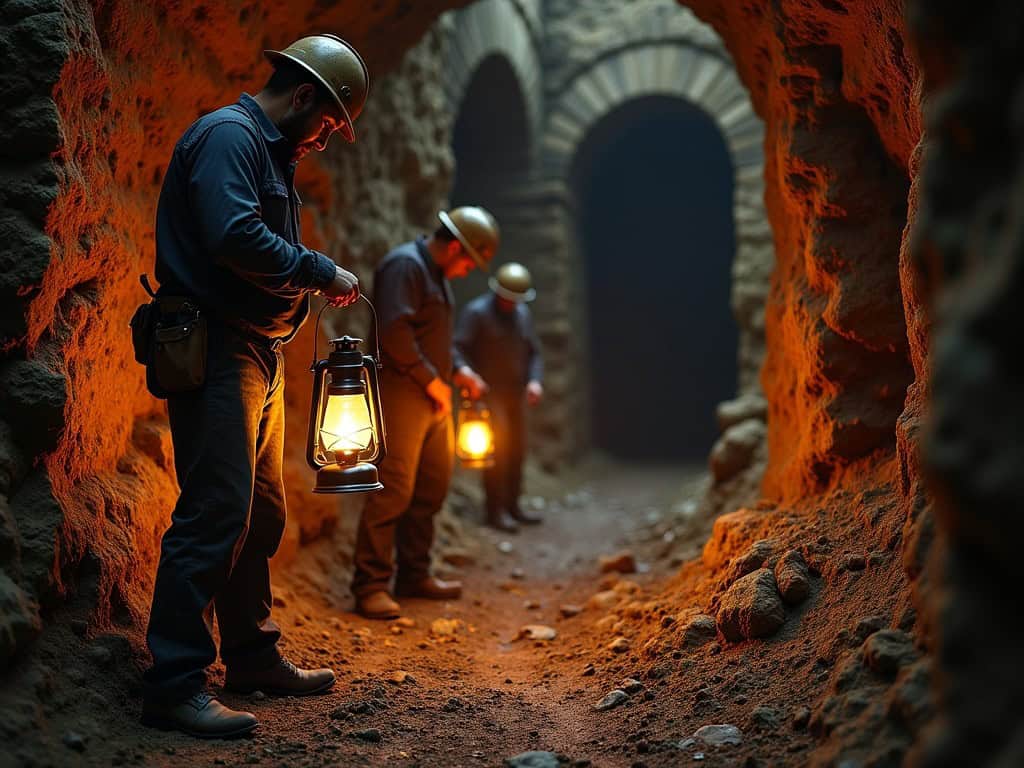
Just before dawn on June 3, 1997, police forcibly entered the home of several women in Veldur, a fishing village in western state of Maharashtra, India dragged the women into waiting police vans, beating them with sticks. The only “crime” committed by these women was to lead a peaceful protest against a massive new natural gas plant being built for a Houston-based company named Enron.
 An investigative team from Amnesty International found that a number of the women subsequently sustained injures, including bruising, abrasions and lacerations on arms and legs. Several hundred other peaceful protestors have been arrested and temporarily detained by Indian police since December 96, according to the report.
Gas Goes Global
In recent years natural gas has been heralded as the transition fuel for a sustainable future by environmental policy pundits and big business alike. Enron is the largest supplier of this so-called alternative fuel in the United States through the huge network of pipelines that it owns. Today the company is spreading the gospel of gas throughout the world as it builds new pipelines and power plants in countries ranging from Brazil to India, from Mozambique to the Philippines, but the service has proven to be neither just nor sustainable.
In countries like Argentina, Kuwait and Mozambique, the company has been dogged by allegations that it used political influence in United States to help win contracts for the company. In countries like India and the Philippines, Enron has been accused of charging excessive prices for its services.
Today Enron is also under fire for the potential major environmental and social impacts of a massive new pipeline project that will link natural gas fields in Bolivia and Peru to the megacities of southern Brazil like Sao Paulo. The pipelines are expected to open up pristine forest areas in the Amazon to unsustainable development that will drastically alter the livelihoods of local indigenous communities such as the Ayereo, the Chiquitano, and the Izozeno indigenous peoples in and the Guarani Nandeva in Brazil. Proposed extensions into Peru will affect the Machiguenga indigenous peoples as well as uncontacted tribes like the Nahua and the Kugapakori.
Here in the United States Enron has also been the subject of criticism. For example activists point out that Enron has used powerful friends in government to rewrite laws on the energy futures markets (a major source of company income) so that these markets are now exempt from federal government oversight as well as from fraud laws. Meanwhile the company has been forced to revise a natural gas power plant projects in Boston because of the environmental impact on local water.
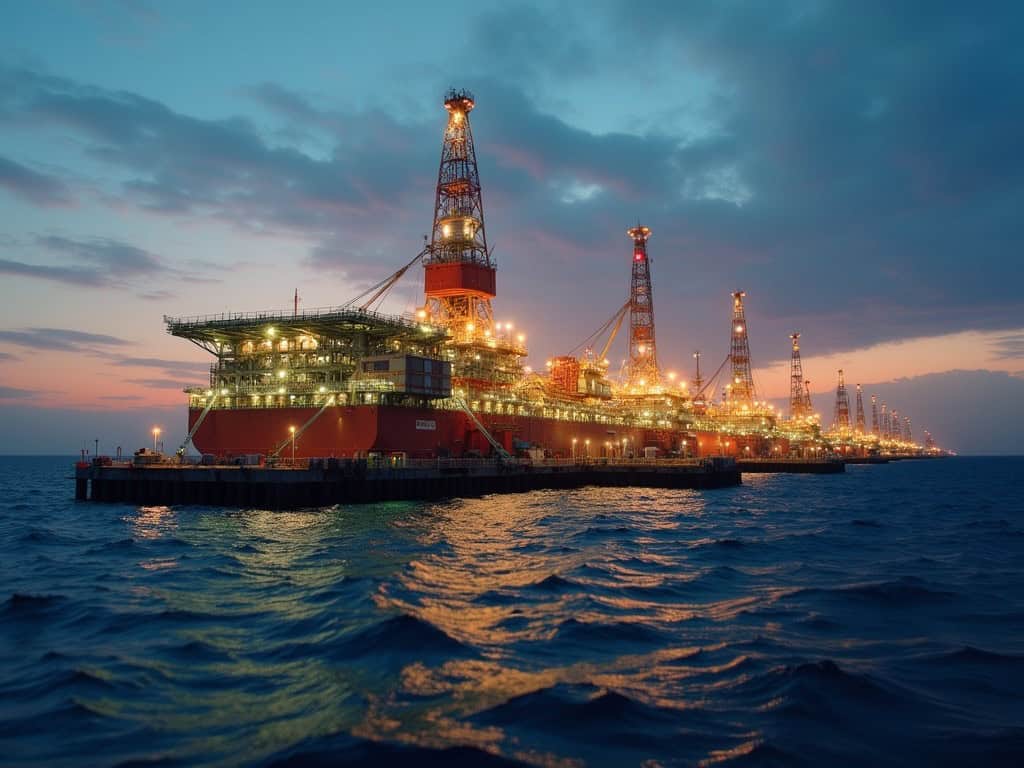
Below are some more detailed examples of the impact of this natural gas giant on communities in the last few years:
Village Protests in India
In early 1995, Enron and its partners began clearing ground 160 kilometers south of Bombay on 600 hectares of porous red rock and shrub covered hills that make up the volcanic outcrop overlooking the Arabian sea on the southwest coast of India. Their planned 2,015 megawatt plant, a $2.8 billion project, is the largest single foreign investment in India.
Since then local villagers and fisherfolk have protested on a number of occasions against the potential effect of the power plant on the local population and the environment. The villagers claim that effluent from the power plant will destroy the fragile environment that they depend on.
One of the most recent protests, held on May 15, was broken up by force. “The police and Special Reserve Police personnel stationed at the project site lathi-charged (lathi is the Hindi word for stick) and dragged women protestors by their hair into waiting police vans. Many women protestors also reported that they were roughed up and manhandled by the police and their dresses and sarees (a traditional Indian women‰s dress) were torn in the process,” says the Amnesty report.
Local police apparently then decided to launch a pre-emptive strike against the activists. On the morning of June 3 they stormed Veldur. One woman, Sugandha Vasudev Bhalekar — a 24 year old housewife who was three months pregnant at the time of her arrest on 3 June — testified to the Judicial Magistrate, on 9 June:
“At around 5 in the morning when I was in the bathroom, several male police with batons in their hands forcibly entered the house and started beating members of (my) family who were asleep. ….. Being terrified, I told them from inside the bathroom that I was taking a bath and that I would come out after wearing my clothes. I asked them to call for women police in the meantime and to ask them to wait near the door. But without paying any attention to my requests, the policemen forcibly opened the door and dragged me out of the house into the police van parked on the road. (While dragging me) the police kept beating me on my back with batons. The humiliation meted out to the other members of my family was similar to the way I was humiliated. .. … my one and a half year old daughter held on to me but the police kicked her away.” Reports indicate that she was targeted for attack by the police because husband, Baba Bhalekar, was a known leader of the protests.
Of the 26 women arrested, 25 were held in one room of 150 square feet with a washing area and toilet at one end and steel mesh at the other, overlooked by a constable. According to the PUCL team who visited the police lock-up on 7 June: “There was no light or fan ….. The entire room stank”. Amnesty International says that the conditions in the Chiplun police station lock-up amount to cruel, inhuman and degrading treatment.
The police raid has not stopped local protests. In August 1997, a local group called the Akhil Maharashtra Machhimar Kriti Samiti (AMMKS) vowed to keep up the protests until the Enron project is canceled.

Rainforests Threatened in Brazil
In the summer of 1997 the Bolivian and Brazilian president inaugrated construction of a $2 billion 3,200 kilometer long natural gas pipeline. The pipeline will begin in Santa Cruz, at the eastern foot of the Bolivian Andes, and end in the teeming megapolis of Sao Paulo in southern Brazil.
Planners are thinking of extending the Bolivian section further west into the central Peruvian Amazon to the Camisea area where Shell is drilling for gas in the Urabamba valley.
Enron is a major stakeholder in this project together with El Paso natural gas, BHP, British Gas and Tenneco. The pipeline was commissioned by Petrobras of Brazil and Yacimientos Petroliferos Fiscales Bolivianos (YPFB) of Bolivia and is projected to eventually supply 30 million cubic meters of gas a day to the power hungry population centres of Brazil’s eastern seaboard.
Two state associations of municipalities — in Sao Paulo and Mato Grosso — issued a joint resolution in June condemning the project planners for not talking to them about potential environmental and social impacts of the project. The two municipal associations were also upset that the project is exempt from local and state revenue collection.
Environmental groups in Brazil like the Defense of Pantanal Association and the Brazilian Institute of Cultural Heritage have also expressed concern over the project while unions in both countries have expressed anger over the private sector role in the project.
If the project goes ahead, construction crews are expected to clear a 30 metre wide paths in Bolivia to lay 540 kilometres of pipeline along the border of the subtropical dry forest of Gran Chaco park, through the Izozog, Chiquitos and Utoquis swamps as well as the Santa Cruz la Vieja Park.
Across the border in Brazil, a 20 metre wide path will be cleared to lay another 2,315 kilometres of new pipeline through the Pantanal in Mato Grosso do sul, the largest wetlands in the world and the mountainous Aparrados of the Serra in the state of Rio Grande do Sul which have high erosion potential.
In the south-eastern Brazilian states of Santa Catarina and Sao Paulo, the pipeline will pass through the Mata Atlantica forest reserve, the Ibitinga and Corumbatati protected areas as well as the Ipanema national forest.
The project will pass the territories of the Ayereo, the Chiquitano, and the Izozeno indigenous peoples in Bolivia while it may impact several indigenous communities in Brazil such as the Guarani Nandeva, a semi-nomadic group that depends on fishing, hunting and subsistence farming.
Political Payoffs in the United States
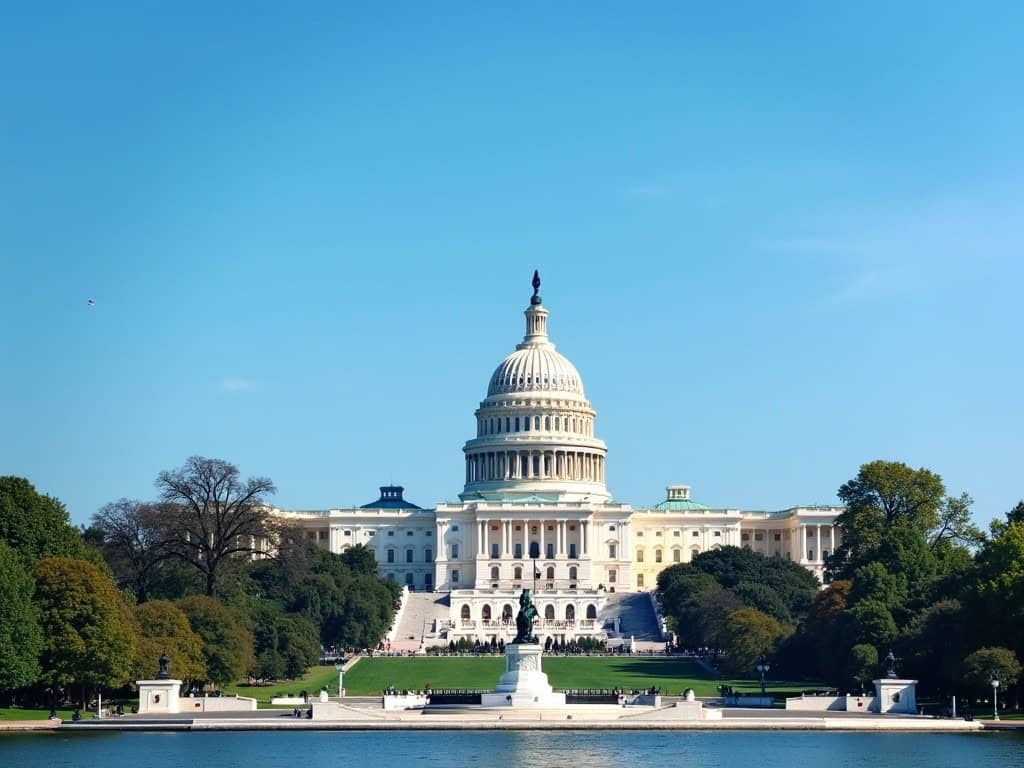
In this country Enron has traditionally been a major supporter of the Republican party. Ken Lay, the chief executive of Enron, hosted the Republican national convention in Houston in 1992. After George Bush, the incumbent president, lost the 1992 election, Enron started to pump money into Democratic coffers such as Lloyd Bentsen, another Texan, and Clinton’s first treasury. In one Senate election campaign, the Democrat received more than $14,000 from Enron. According to the Washington, D.C.-based Center for Responsive Politics, the amount is the second highest paid out by Enron to a political campaign.
Bentsen quit his job as Treasury Secretary at the end of 1994 and was succeeded by Robert Rubin, who worked closely with Enron when he was co-chair of Goldman Sachs investment bank. Clinton first hired Rubin to head his National Economic Council. Soon afterwards, Rubin wrote on Goldman Sachs stationery to former clients, including Enron, saying he “looked forward to continuing to work with you in my new capacity.”
After this ethical lapse, Rubin filed a White House financial disclosure form that listed Enron among the names of 42 former clients with whom he had had “significant contact.” Rubin pledged to recuse himself from any government dealings affecting these former clients for one year, a period that has since lapsed.
Enron’s lobbying clout was demonstrated in its attempts to deregulate the energy futures markets that enhance its profits. Enron was one of nine energy companies that asked the U.S. Commodity Futures Trading Commission (CFTC) in November 1992 to exempt energy derivative contracts from federal government oversight as well as from fraud laws. The request was made right after Bill Clinton won the U.S. presidential election at a time when the political composition of the board was likely to change soon. The five-member commission is made up of three members from the ruling party and two from the majority party.
The deregulatory push was advanced by Wendy Gramm, the CFTC chair, who authorized the commission staff to begin the lengthy rule-making process required when a federal agency makes a major policy decision. Gramm, a former senior staff member of the Reagan White House, resigned as chair of the commission on January 21, 1993, as Clinton took office. Wendy Gramm is the wife of Phil Gramm, the ultra-conservative Republican Senator from Texas.
Five weeks after Gramm resigned, she was appointed to Enron’s board of directors, just as the commission voted two to one to deregulate the energy derivative contracts business. President Clinton had yet to appoint anyone to the two vacant seats on the CFTC board; the commissioners who embraced deregulation were Gramm allies appointed during the Bush administration.
The regulatory exemption for energy futures was made retroactive to 1974 – when the CFTC was created – to remove any potential legal challenges to past energy contracts. The exemption from fraud legislation that the industry wanted was dropped in response to objections in Congress. Gramm and Lay say there is no connection between the CFTC decision and Gramm’s appointment to Enron’s board.
Enron has also been under fire for the environmental impact of its activities at a company power plant in Boston. Each day, for six weeks in the summer of 1995, a million litres of water were trucked to the plant just outside Boston to prevent the Charles river from shrinking to less than half its normal flow as a result of plant operations.
War Bounty From Kuwait
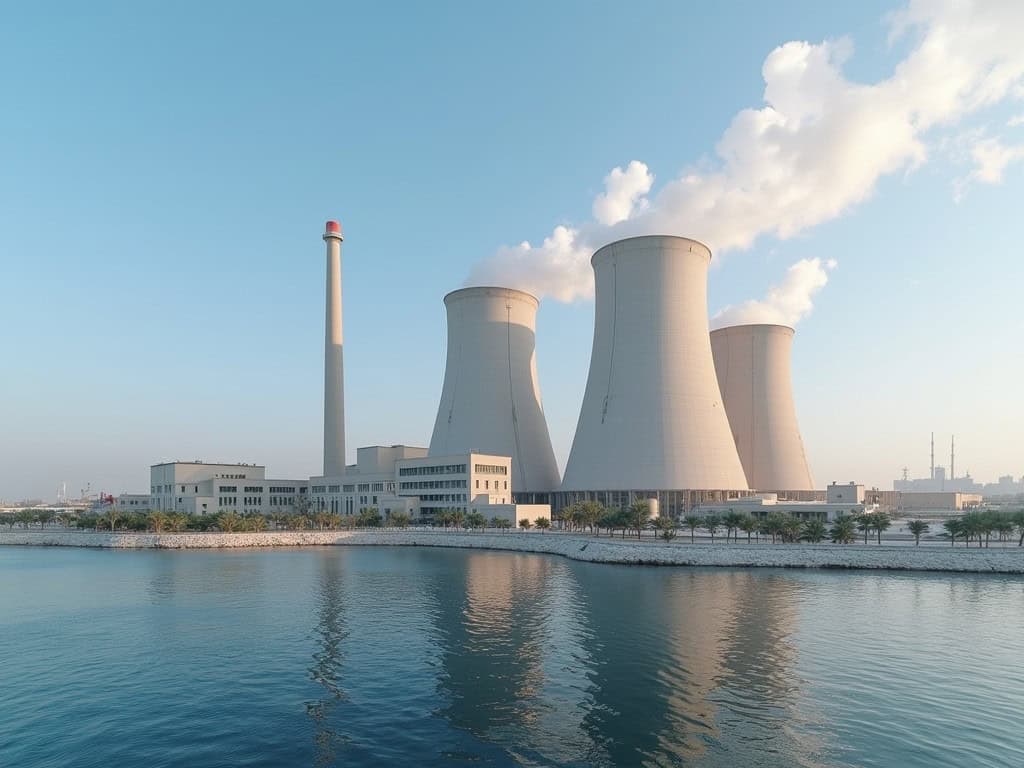
In the early 1990s Enron bid for a contract to rebuild Shuaiba North, a 400-megawatt power plant that supplied 5 percent of Kuwait’s electricity before it was bombed during the 1991 Gulf war, according to journalist Seymour Hersh.
Hersh wrote in a 1993 New Yorker magazine article that Enron’s price for supplying the power is 11 cents a kilowatt hour. The rival bid put forward by the German company Deutsche Babcock was six cents, while the state-subsidized rate is half-a-cent a kilowatt hour.
Despite the large price difference, Hersh noted that Enron’s bid received favorable consideration after help arrived from former US president George Bush, a good friend of Enron founder and chief executive Kenneth Lay. Lay, raised funds for Bush’s 1992 re-election bid and hosted the reception committee for the Republican National Convention that year.
In 1993 Bush visited Kuwait along with former U.S. Secretary of State James Baker. At the time Baker, former Commerce Secretary Robert Mosbacher, as well as Thomas Kelly, the director of operations for Bush’s Joint Chiefs of Staff during the Gulf war, were on payroll working for Enron.
Hersh says in his New Yorker article that Baker, along with the former president’s two youngest sons, Neil and Marvin, remained in Kuwait after Bush left to promote the Enron bid to rebuild Shuaiba with the Kuwaiti utility ministry. Their efforts apparently paid off initially. Hersh’s sources told him that Enron’s Kuwaiti business partners in the bid to rebuild Shuaiba had “obviously been hand picked” by the Kuwaiti prime minister. Enron calls the New Yorker article “completely incorrect.” The company now says it has abandoned the project in Kuwait.

Uncle Sam’s Heavy Hand
In Mozambique, the Philippines and Argentina, Enron has been accused of putting pressure on the local authorities through powerful figures in the United States government.
Mozambique
In November 1995 Enron signed an agreement to build a 900-kilometre long gas pipeline from Mozambique to South Africa to develop the Pande gas field, in southern Mozambique, which has an estimated two trillion cubic feet of natural gas reserves. Enron beat Sasol, the South African state petroleum processing company, for the bid. The month that Enron signed the contract the Houston Chronicle carried a detailed report alleging that Anthony Lake, President Bill Clinton’s National Security Adviser, the U.S. Agency for International Development (USAID), and the U.S. Embassy in Maputo, put pressure on the Mozambican government to sign with Enron. “Enron was forever playing games with us and the embassy forever threatening to withdraw aid. Everyone was saying that we would not sign the deal because I wanted a percentage, when all I wanted was a better deal for the state,” says John Kachamila, Mozambique’s natural resources minister and the leader in the negotiations, told the Chronicle.
Philippines
In 1993 Enron won a contract to build a 105-megawatt, diesel-fired power plant in the Philippines that critics said would cost the Philippine National Power Corporation (NPC) eight cents a kilowatt hour – 20 percent more than NPC charged consumers. The controversy led to resignations in 1993 of all seven members of the NPC board.
Argentina
The Bush children have also come in for criticism in Argentina for their role in an Enron bid to construct a pipeline from Argentina to Chile. George W. Bush, the governor of Texas and a son of the former president, called Rodolfo Terragno, the Argentine cabinet minister in charge of public works under then-President Raul Alfonsin, to ask him to give Enron the contract. Terragno reported this pressure tactic to the press causing the project to come under some scrutiny. Nevertheless the contract ended up being awarded to Enron under the current President, Carlos Menem, shortly after he was publicly seen socialising with Bush.

Greenwashing of Gas
An ad by Enron corporation shows an eagle soaring above forests, rivers and mountains. The caption reads: “Isn’t it wonderful natural gas is invisible so the rest of nature never will be?”
Natural gas is not clean it has a major greenhouse impact that approaches that of coal and oil. Its extraction and transmission also poses serious threats to life and the environment.
The combustion of natural gas causes almost no sulphur dioxide emissions. Nor does it create the kind of fine ash that contributes to the respiratory problems experienced by residents areas where coal is burned.
However, the impact of natural gas on the global climate is rarely discussed. In theory, natural gas produces about half as much greenhouse gases as coal and two thirds that of petroleum because it has a lower carbon content and thus produces less carbon dioxide – the primary greenhouse gas – when burnt.
However, natural gas is 90 % methane. Methane has a greenhouse impact estimated at least 20 times greater than that of the carbon dioxide. If even a minute quantity of methane leaks before it is burned, it could completely offset the benefit of switching to the supposedly cleaner fuel.
The question is how much gas leaks through the system. Charles Kolb, of Aerodyne Research of Massachusetts says that the latest measurements published by his groups of researchers leads him to estimate that between 1 2 % of natural gas pumped through the United States distribution system leaks into the atmosphere.
If correct, the Aerodyne figures on leakage would push the greenhouse impact of natural gas to a range between 62 and 78 %of coal and between 80 and 90 % of petroleum.
Add on top of that the amount of methane that is directly vented during the drilling, transport, and refining stages of gas production and gas could actually end up having more of an impact on climate change than coal and oil.
In addition, the US has the most modern gas distribution system in the world. Millions of miles of older, corroding pipes are currently in use in places like Russia and China, and throughout the developing world.
The leaks are worse for vehicles. Studies of natural gas powered vehicles by the U.S. Environmental Protection Agency (EPA) in 1990 show that two out of three had a greater greenhouse impact than petrol burning vehicles.
In addition, most natural gas powered cars created more nitrogen oxides, a primary ingredient of smog, than petrol burning vehicles. The EPA figures are probably low because losses of methane and other gases at the production site were left out of the calculations.
Finally, the local impacts of drilling for natural gas are virtually the same as drilling for oil. Each well produces 1,500 to 2,000 tons of toxic drilling muds and cuttings, and millions of gallons of formation waters are produced and discharged every day. These wastes can include toxic material like arsenic, lead and radium 226. Drilling wastes in the Gulf of Mexico have smothered ocean bottom life to help create a 5,000 square km. “dead zone.”


